
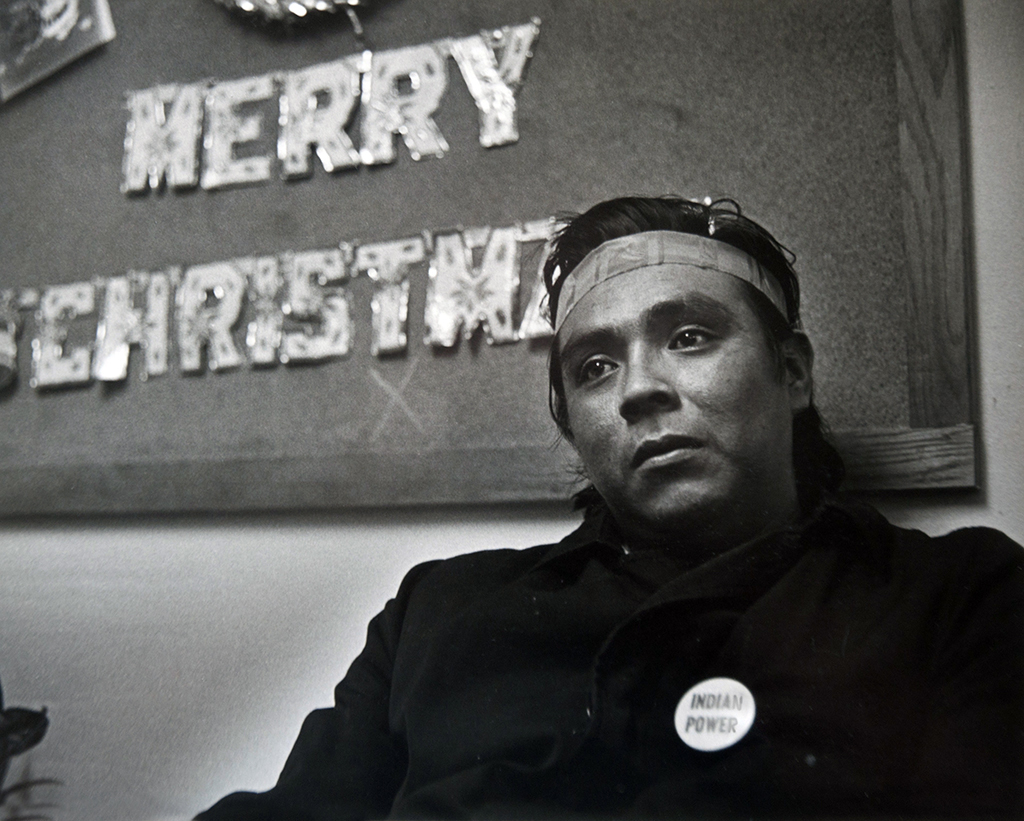
Marvin (Pima native), A.I.M. (American Indian Movement) takeover of the B.I.A.
(Bureau of Indian Affairs office), Chicago, March 23, 1970
Text and Photograph by Bruce Berman
I was having a pretty good year when I was 23.
What the heck… worked in a camera store, the boss let me buy a Canon QL camera at cost, there was built-in “subject matter” everywhere. This was the aftermath months of MLK’s assassination, the riotous 1968 Democratic debacle, Bobbie’s takedown,
in L.A. and rthe rise of the SDS Weathermen.
Even if, as a beginning photographer, I didn’t know what to shoot or even, really, how to (let alone was just beinning to get some chops down in print production in the darkroom), there was always something happening.
Marvin was a guy I had met at an inti-war demonstration in Lincoln Park earlier in the year. He called me and informed me he was part of a group that was going to do a demonstration at the Midwest Regional office of the B.I.A. (Bureau of Indian Offices). He asked if I could come down and make some photographs.
March 23, 1970: Activists in Chicago staged a massive sit-in alongside protests at five other BIA regional offices across the country to demand that the federal government provide services to Natives living off reservations. These localized Chicago demonstrations paved the way for larger actions, including the 1972 Trail of Broken Treaties which culminated in the takeover of the national BIA headquarters in Washington, D.C
Specifically, he said, “… I think all hell’s gonnna break out and it would be great to have some pictures.”
I pondered that. Did I want to be in the middle of a breakout of hell?
Guess that’s what most young photojournalists must ask themselves when they enter the hard news profession. There’s a lot of “hell” to cover in the news.
I was hesitating.
Finally, Marvin said, “Look Bruce, if we don’t have pictures it’s like it never happened.”
Bam!
Right there was pretty much Photojournalism 101! No photograph = it didn’t happen.
I said, “yes.”
A career decision had been made. Hell or no hell if you aren’t there it didn’t happen.
I had already begun an interest in indian affairs, covered other demonstrations, wanted to be part of the protest but didn’t know how to do it.
Here was an opportunity to learn to “do it.”
The question now becomes, if you have the data –photos, writing, video– where does it (the story) go that it ends up mattering. Obviously the web is primary. But the question there, not how you reach your “followers,” but how do you inform non followers, the general public.
MORE INFO:
A.I.M. https://en.wikipedia.org/wiki/American_Indian_Movement
RED POWER ACTIVISM. https://en.wikipedia.org/wiki/American_Indian_Movement