Archive for category The Americas
Alan Berner And The American West
Posted by bruce in Documentary Photography, Photography That Matters, The Americas on July 29, 2009
Harold G. Olson and his goat Buddy,
Stuck, Washington, ©2005
(from a story on annexation in
King County, Washington)
Alan Berner is a staff photographer for the Seattle Times.
He is also one of the most exciting, interesting and undiscovered photography talents on the planet.
His work is lyrical, thoughtful, enjoyable, moving, well constructed and intelligent. Read the rest of this entry »
Lartigue: The Human Is The Tool
Posted by bruce in Documentary Photography, Photography That Matters, The Americas, fun on July 13, 2009
For More Photos by JHL: http://photography-now.net/jacques_henry_lartigue/portfolio1.html
In a time when camera phones -and videos- are ubiquitous and that, in many cases, people using them are the only sources of images and information (Iran), the work of Jacques Henri Lartigue is even more relevant than it was in the early 20th Century.
Lartigue, the boy, wasn’t a photographer: he was a kid with a camera. No big deal. Like people with camera phones now.
Look at the images!
Joyous, exuberant, beautiful in composition and moment of capture, they stand as a good document of the times and an excellent expression from that young boy who, obviously, exalted at the possibilities of his life in general and the possibilities of photography in paticular.
So, keep those camera phones snapping (if you have the “snap” sound enabled) and keep posting them on MySpace and Twitter and Flickr and Facebook and keep some of the big hitters (NY Times, etc.) telephone numbers in the other end of that phone, because, once again, we’re reminded, it ain’t the tool, it’s the eye and heart and mind.
Yours (if you use it).
Victor Sera: Uprooted
Posted by bruce in Documentary Photography, The Americas on May 27, 2009
©Victor Sera
GO TO: http://www.fiftycrows.org/index.php#mi=2&pt=1&pi=10000&s=1&a=7&p=0&at=3
This is a photo essay on the lives of the undocumented as they navigate between their homes and their country chosen for work.
In some ways the “landscape,” of this document has changed since it was photographed in the 1990’s. The immigration interdiction efforts by the United States has reduced the number of migrants and, more recently, the lack of jobs in the U.S. due to the faltering economy has reduced it even further. The personal plight for migrants in the U.S. has changed for the worse, making any return to the mother country impossible due to the danger of the return journey.
This document, however, is still quite valid. The existential delemna of home and heart weighed against stomach and uprootedness is ongoing, worldwide and, as this work shows, problematic.
Sam Faulkner
Posted by bruce in Children, Documentary Photography, Photography That Matters, The Americas, The Human Condition on May 22, 2009
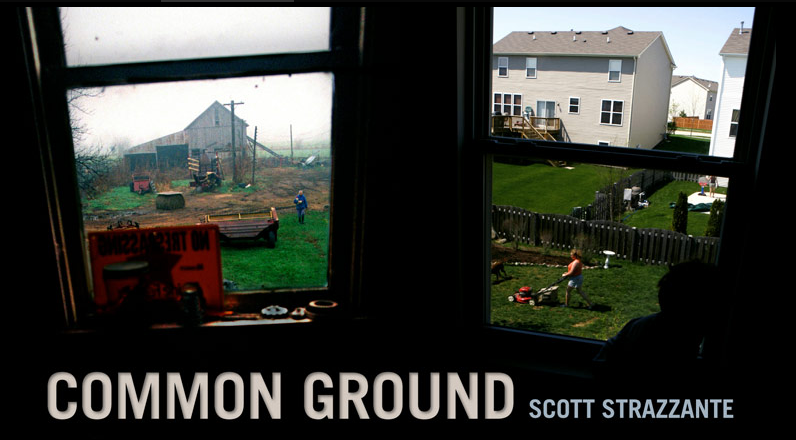
Displacement In The “Heartland”
Posted by bruce in Documentary Photography, Photography That Matters, The Americas, The Human Condition on May 21, 2009
SEE: http://mediastorm.org/0023.htm
A documentary project on Displacement…in the “Heartland!
This photographer shows how “progress,” comes to everywhere and the displacement is not limited to indigenous people either. In the end it is the interests of Capital weighed against the interests of Labor that is the issue of land appropriation and displacement.
Let this documentary speak for itself.
Los Ninos de Las Calles/Mexico
Posted by bruce in Children, Documentary Photography, Photography That Matters, The Americas, The Human Condition on May 20, 2009
GO HERE: http://truthwithacamera.org/mexico_slideshow.mov
Editor’s Note: This is from Truth With A Camera, the incredible workshops supported by the National Press Photographers Association (NPPA). Never a better example of what Still Documentary Photography is and can do.
Avedon And The American West (Sort of…)
Posted by bruce in The Americas, The Human Condition on February 12, 2009
This is one way to approach Documentary. Severely remove all elements of the subject except the subject itself.
Notice that without a background the photographer absolutely controls the statement.